Milestones in the Croquet startup adventure
After a year of prototypes and demonstrations, in 2018 we founded CEO Vision, which later became Croquet Corporation (and later yet Croquet Labs... but that's not important right now). This page uses captioned videos to present some of the things that were built along the way. My contributions were at the core of some projects, more peripheral on others.
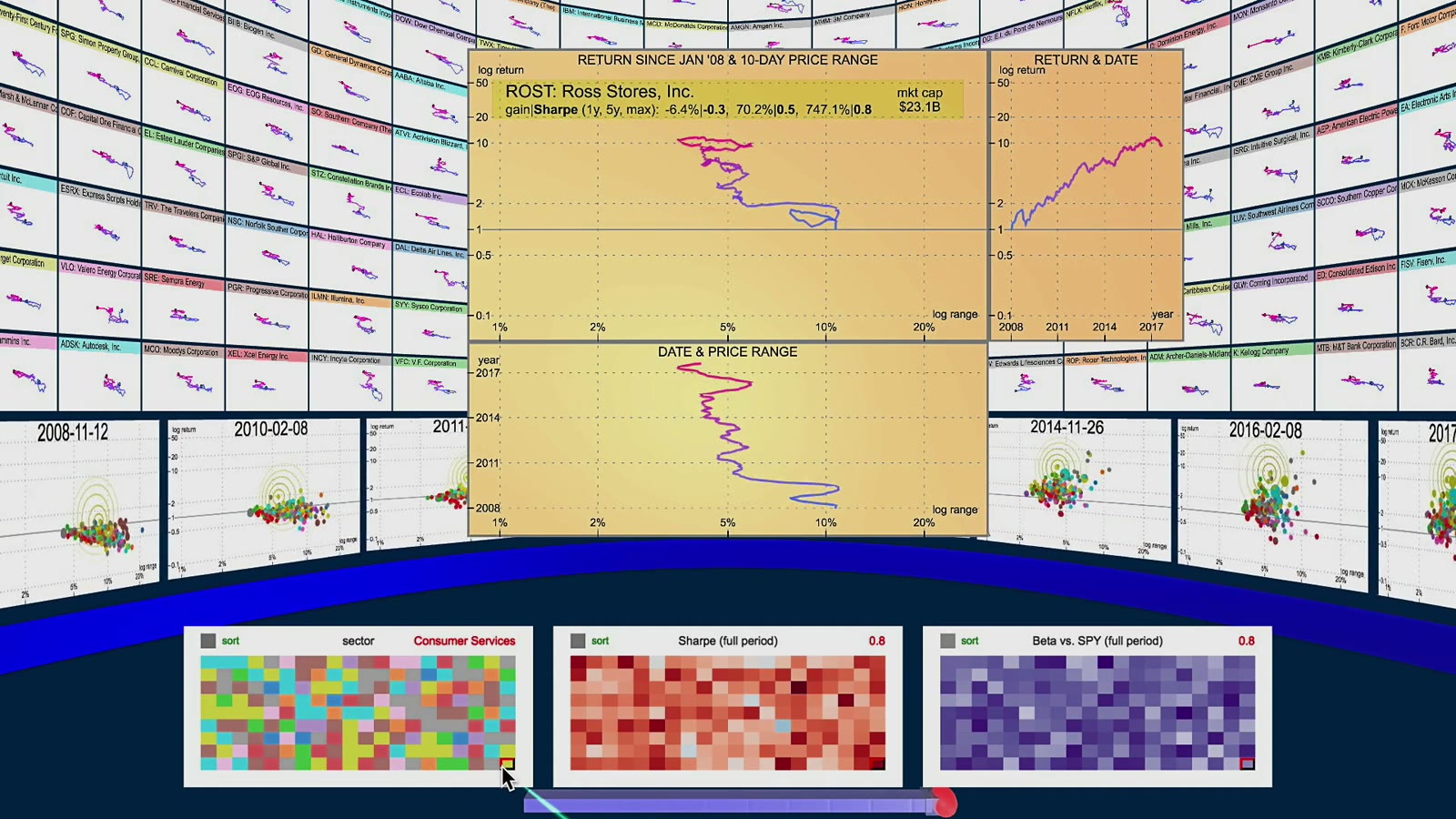
CEO Vision: 3D information spaces
David A Smith kicked everything off with an architecture for a 3D information-management environment that would run in a web browser. The idea was to build high-density information displays that took advantage of the increased resolutions that WebGL-enabled 3D worlds could now offer. David and I shared out the demo-building work; Chart Wall was one of mine.
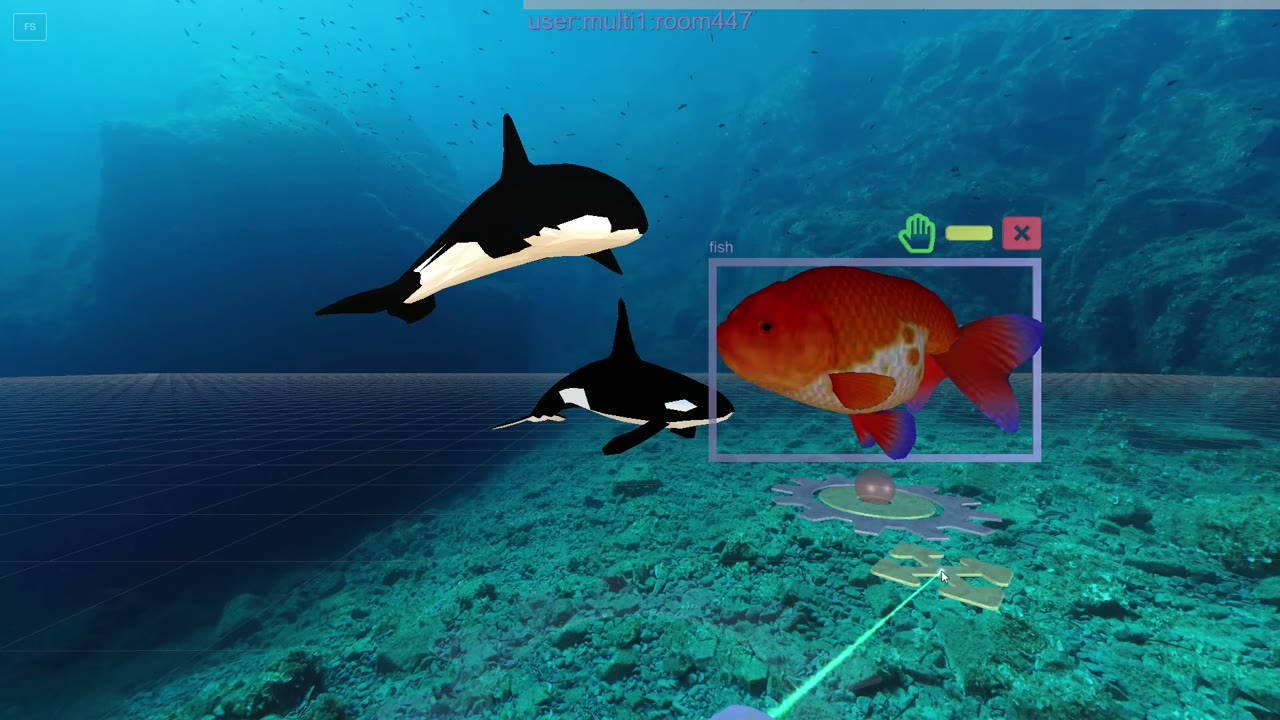
ARCOS: connected rooms filled with interactive toys
ARCOS is considered by us to be Croquet V - the fifth Croquet incarnation (the first being the Smalltalk version built by David and others in 2004). ARCOS had shared 3D rooms linked by portals, filled with interactive objects, and reachable from a phone in AR. I implemented ARCOS's event- and data-sharing backbone using CouchDB, which met our needs at the time. I was also the person keeping up with the ever-changing WebXR, so we could create AR experiences.
Croquet for replicated computation
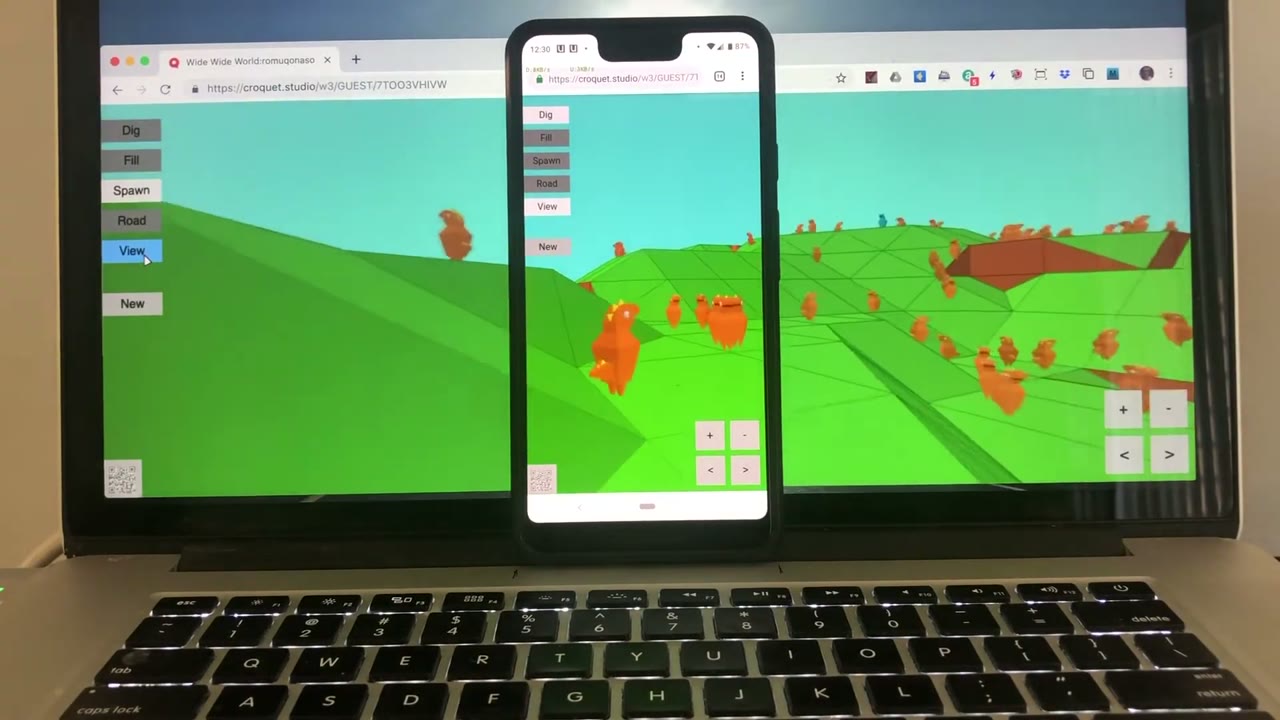
Croquet VI brought into the JavaScript world the essence of the Croquet approach: bit-identical replicated computation. When all clients start with identical state (and identical code), and compute state changes in response to a broadcast tick stream, they will always stay in perfect sync. External events, such as user input, are broadcast alongside the ticks and again handled identically by all clients.
Croquet for real-time sync
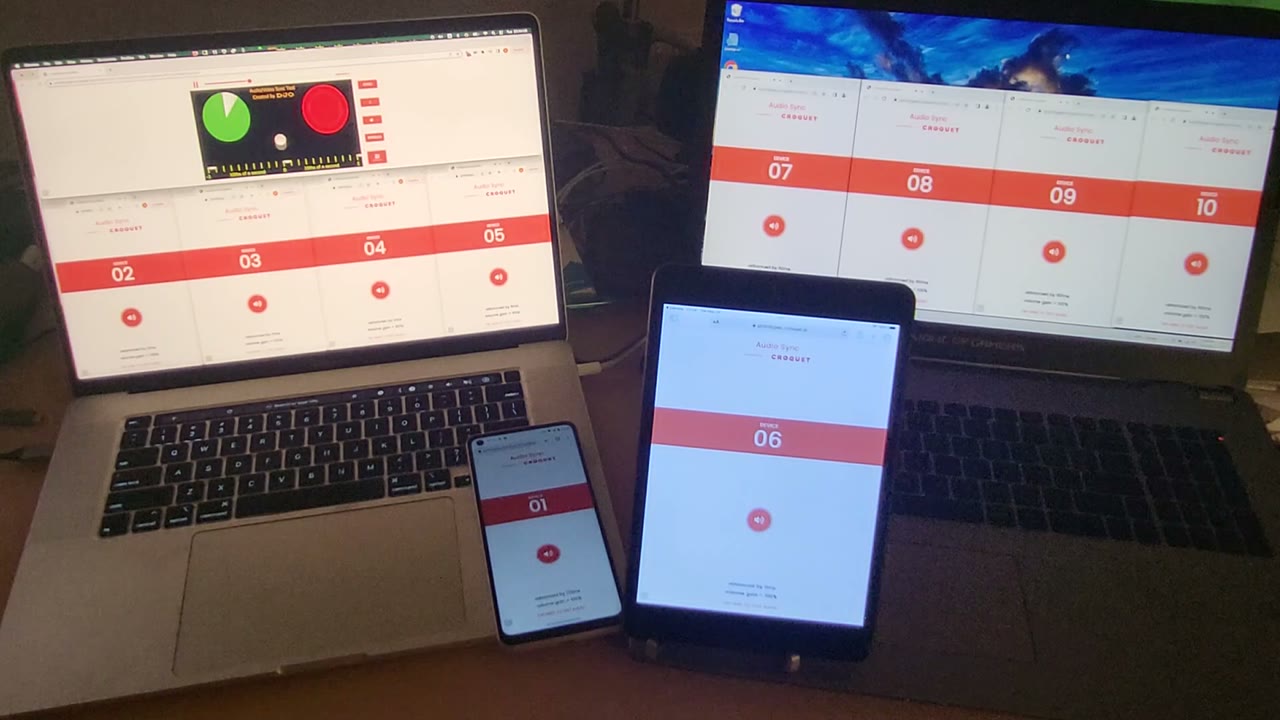
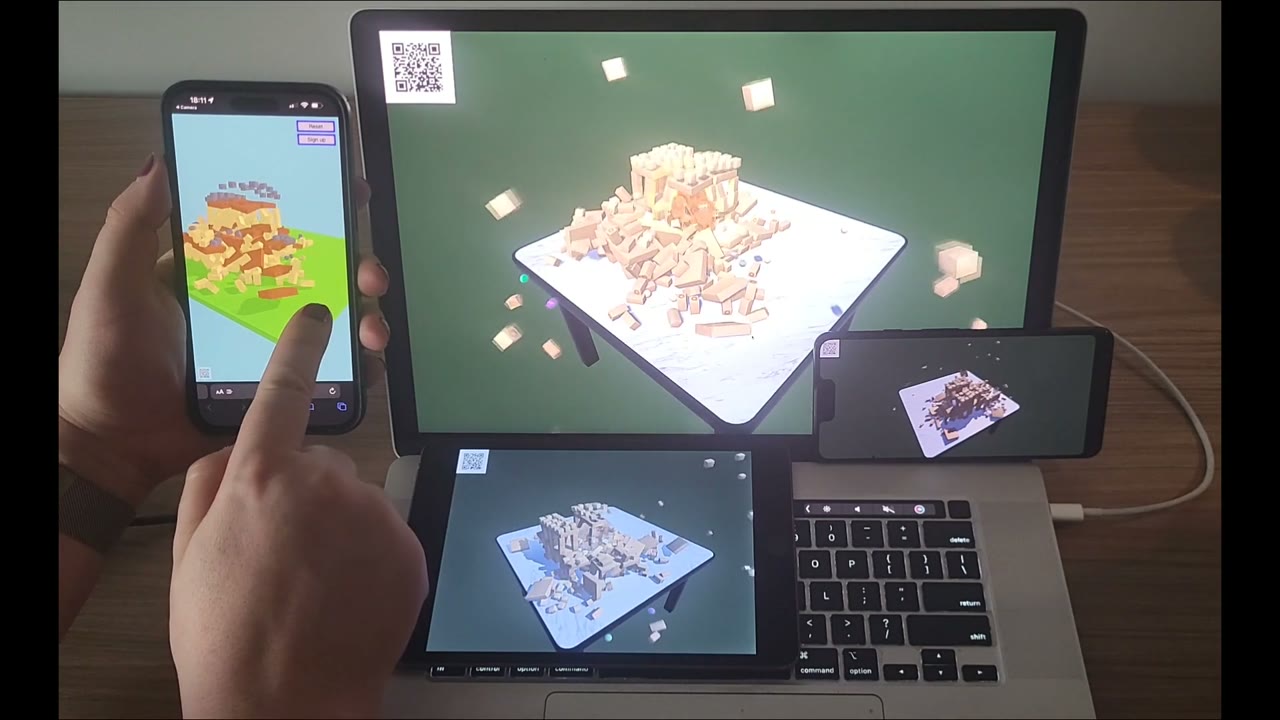
The Croquet protocol defines a synthetic time (“Teatime”), whose advance at each client can differ due to processor and network conditions: a client on a cellular connection, for example, will usually run slightly behind a client on a wired desktop. I extended the protocol with an NTP-like feature that enables real-time cross-client sync in applications that need it. One use of this feature was in Mediaverse, a set of apps I developed that run precisely synchronised audio and video across diverse devices and network connectivities.
Croquet for multiuser collaboration
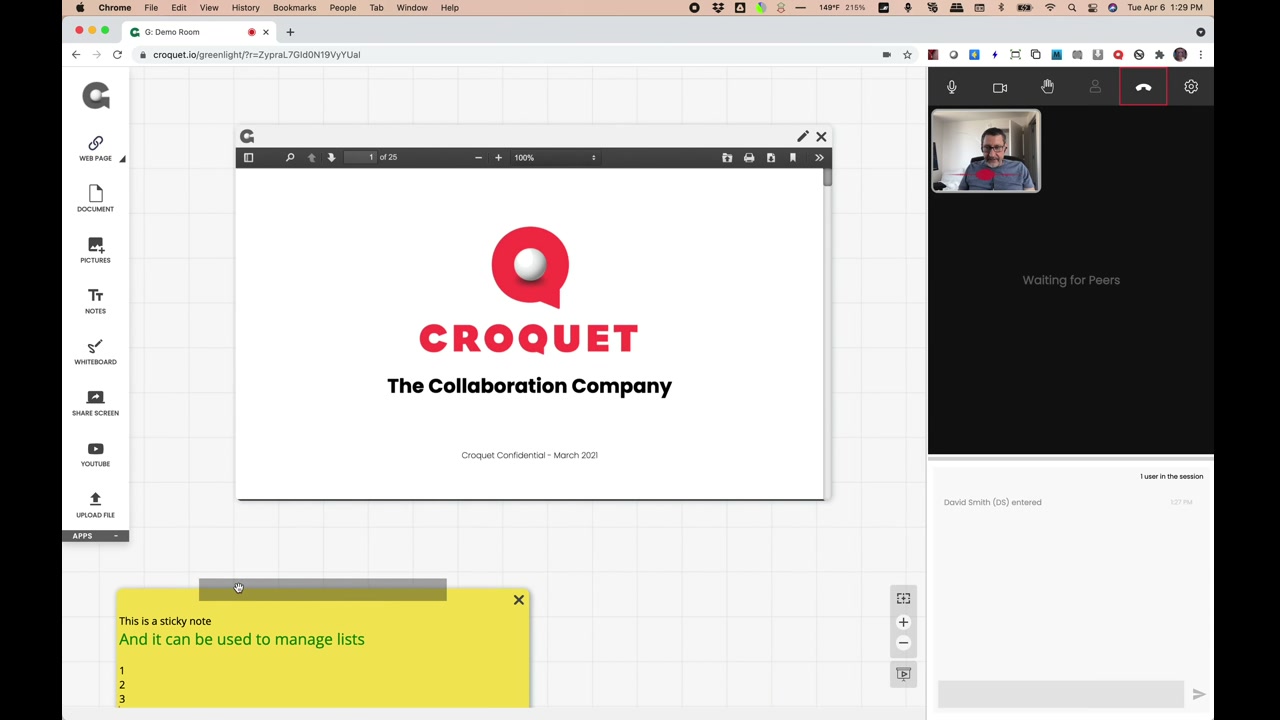
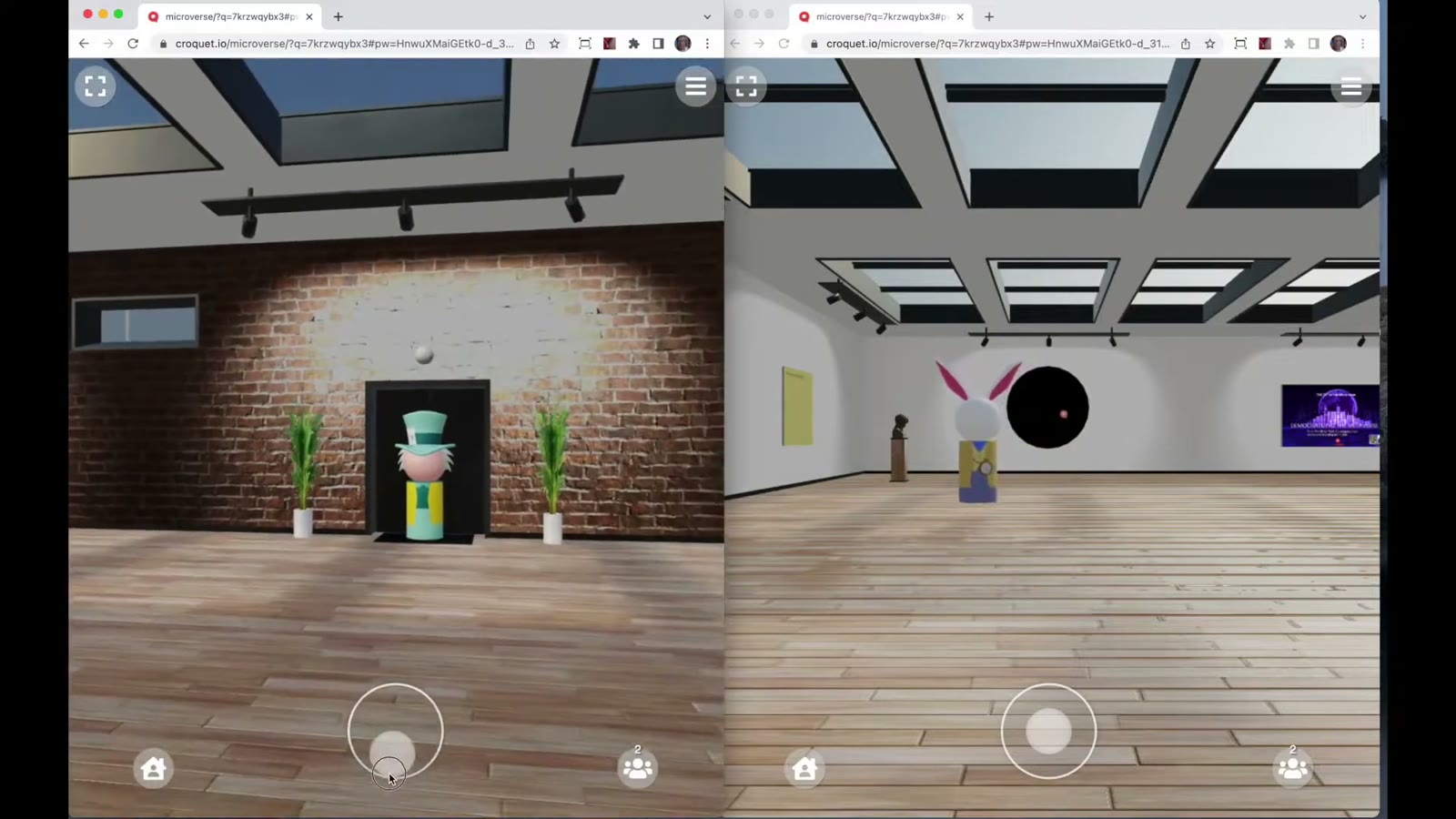
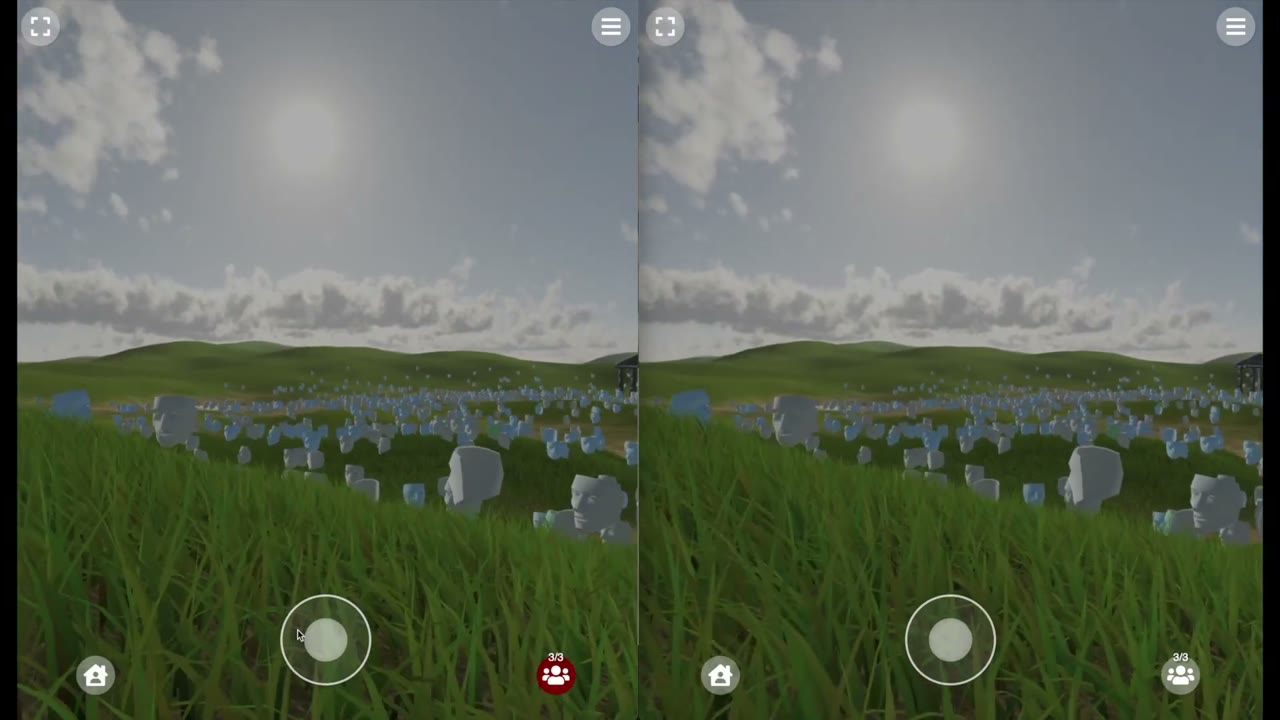
We created Croquet-based tools for collaboration in both 2D and 3D spaces. Greenlight lets you set up shared meeting rooms for live or asynchronous sharing: fill a room with interactive document viewers, text or graphical editors, or general Croquet-driven apps, and everyone sees the same state. Microverse offers the same kind of sharing, but in 3D spaces; Mythos is a game-scale world built on top of Microverse.
Croquet for console-quality games
The resources available for rendering web-based games have generally fallen short of those of native game platforms. We built a bridge to allow a Croquet-synchronised JavaScript game to use Unity's full rendering capabilities, for delivery on phones, desktops and the web.